A work cooler has a harder job than a lunch bag. It has to hold lunch, snacks and enough cold water for a long shift, sit in a truck or on a jobsite from early morning, survive being thrown in a cab and dragged across concrete, and still keep food safe in the afternoon. For construction crews, landscapers, linemen, warehouse and farm workers, cold water is not a comfort but a safety requirement: OSHA's heat guidance tells workers to drink a cup of water every 15–20 minutes in the heat, even when they are not thirsty. This guide explains how to size a work cooler, what makes one survive daily jobsite use, and how to keep food safe until the end of the shift. It is written by Sealock (YiFuLong Outdoor Gear Co., Ltd.), which has manufactured soft coolers and cooler backpacks in China and Vietnam for over 20 years.
How Much Water Does a Shift Need?
The OSHA guidance works out at about a quart of water an hour in hot conditions: a cup, or 8 ounces, every 15–20 minutes. Over a long hot shift that adds up to several litres, more than most people can carry in a lunch bag. OSHA also recommends keeping drinking water cool, below 60°F (15°C), and close to where people are working, and suggests electrolyte drinks during long, heavy, sweaty work. Many employers supply water on site in large jugs, but workers who rely on their own need a cooler sized for water as well as food.
Sizing a Work Cooler
| Shift | What it carries | Size |
|---|---|---|
| 8 hours, water supplied on site | Lunch, snacks, one bottle, an ice pack | About 6–10 L lunch cooler |
| 10–12 hours, water supplied on site | Two meals, snacks, two bottles, two ice packs | About 12–20 L |
| 10–12 hours, carrying your own water in heat | Two meals, snacks, several frozen bottles or a water jug | About 20–30 L, or a lunch cooler plus a separate water jug |
Frozen water bottles do two jobs: they keep the food cold in the morning and they thaw into cold drinking water by the afternoon. Freeze two or three the night before and pack them around the food.
What Makes a Work Cooler Survive the Jobsite
A shell that takes abuse. Heavy coated fabrics such as 840D TPU or PVC tarpaulin resist cuts, abrasion and grease far better than light polyester, and they wipe clean.
A reinforced base. A work cooler is put down on gravel, concrete and truck beds every day. A reinforced or double base stops the wear that eventually turns into a leak.
Strong handles and anchors. A full cooler can weigh more than 15 kg. Handles and straps should be anchored through reinforcing patches, bar-tacks or welded tabs, not sewn to a single layer of shell fabric.
A liner that does not leak. A welded, food-grade liner holds meltwater and spilled drinks inside and stops the foam soaking up water and smelling. A leakproof zipper keeps the truck seat dry.
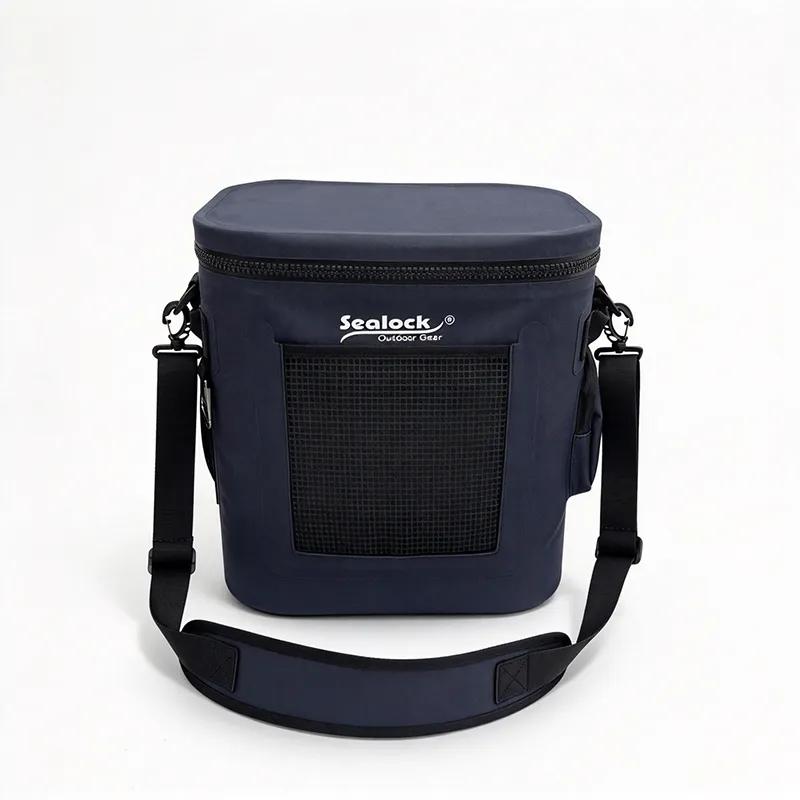
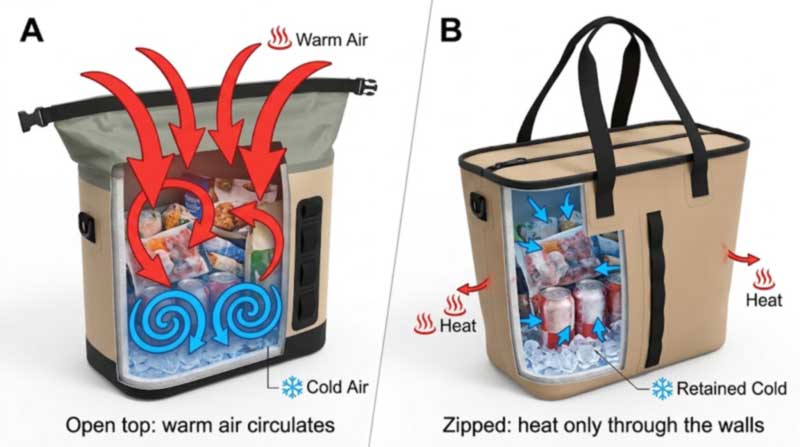
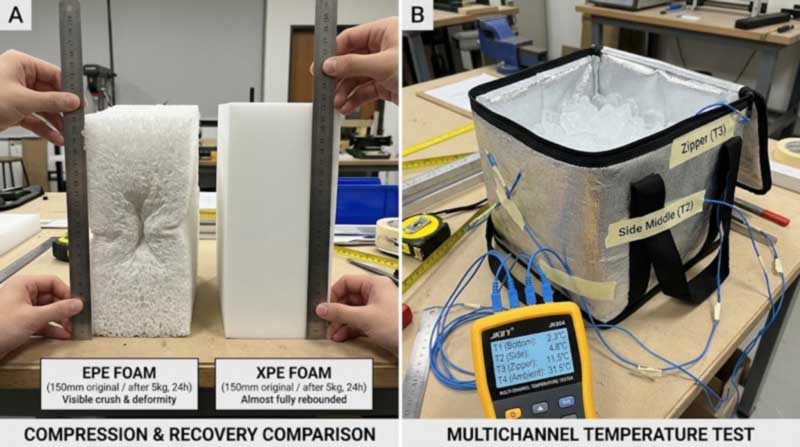
Insulation where it counts. Foam in the lid and base as well as the walls, because a cooler on a hot truck floor gains heat from below.
For the lunch side of the choice, see lunch boxes and lunch bags for men and lunch boxes for adults.
Keeping Food Safe Until the End of the Shift
Perishable food should stay at or below 40°F (4°C). US food-safety guidance recommends at least two cold sources for a packed lunch, and a long shift needs more. Pack the food between frozen bottles or ice packs, keep the cooler in the shade or in the cab rather than in a hot truck bed, and open it only at breaks. If there is a fridge on site, use it. Food that has been above 40°F for more than two hours, or one hour above 90°F, should be thrown away. See ice packs for coolers and lunch boxes.
For Contractors, Unions and Equipment Brands
Work coolers make practical crew gear, safety-week gifts and branded merchandise for contractors, unions, equipment dealers and tool brands. High-visibility colours, reflective trim, company logos and crew names can be added to our existing constructions. We weld leakproof shells and liners by high-frequency welding and sew harnesses, handles and pockets on our own lines, from 300 pieces per design, with samples in 7–15 days and bulk production in 30–45 days. See heavy-duty cooler backpacks.
Work Coolers in Our Range
| Image | Model | Capacity | Dimensions (H × W × D) | Weight | Construction | Use |
|---|---|---|---|---|---|---|
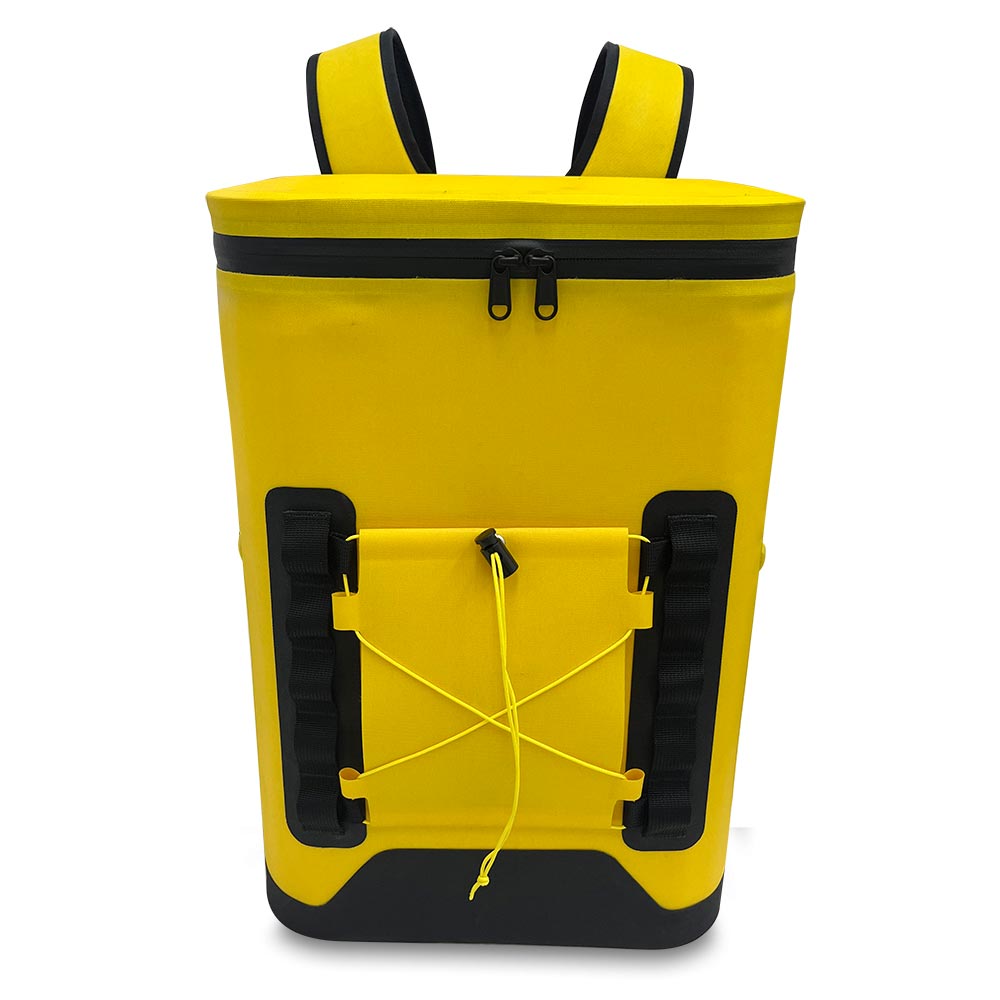
|
Airtight-Zipper Cooler Backpack (SL-I274) | 28 L |
47 × 32 × 22 cm 18.5 × 12.6 × 8.7 in |
2.0 kg / 4.4 lb | 840D TPU, 3 cm EVA core, food-grade TPU membrane, airtight zipper, padded harness; up to 48 hr | 12-hour shifts carrying your own water |
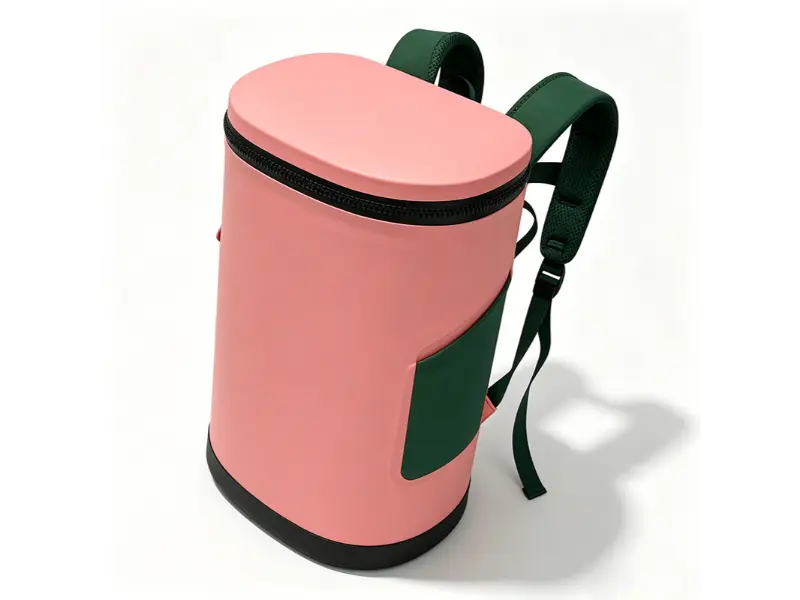
|
Barrel Cooler Backpack (SL-I309) | About 18 L |
47 × 34 × 23 cm 18.5 × 13.4 × 9.1 in |
1.3 kg / 2.9 lb | TPU laminated, closed-cell EPE, food-grade liner, reinforced base, padded straps; about 24–36 hr | 10–12 hour shifts with water on site |

|
Leakproof Lunch Box Cooler | About 21 L | On request | On request | TPU shell, high-frequency welded seams, waterproof zipper, food-safe PEVA liner | Lunch, snacks and drinks for a long shift |
FAQ
Q: What size cooler do I need for a 12-hour shift?
A: About 12–20 litres if water is supplied on site, or 20–30 litres if you carry your own water in hot weather.
Q: How much water should I bring to work in the heat?
A: OSHA advises a cup of water every 15–20 minutes in the heat, even if you are not thirsty, which is about a quart an hour.
Q: How do I keep my lunch cold all day at work?
A: Pack it between frozen water bottles or ice packs, keep the cooler shaded or in the cab, and open it only at breaks. Use a site fridge if there is one.
Q: Soft or hard work cooler?
A: A heavy-duty soft cooler is lighter to carry from the truck and fits behind a seat; a hard cooler suits a fixed spot. Choose a soft cooler with a reinforced base and welded liner.
Q: Can you make branded work coolers for our crews?
A: Yes, in high-visibility colours with reflective trim and your logo, from 300 pieces per design.
Equipping crews or building a work cooler line? Tell us the shift lengths, conditions and branding. We will propose a size and construction and send samples in 7–15 days.
Email: info@sealock.com.hk · Phone: +86-13632981825 · MOQ 300 pcs
Hydration guidance follows OSHA's heat illness prevention advice; food-safety guidance follows USDA advice. Follow your employer's heat illness prevention plan.